
Labrador Growth Chart: Size, Weight and Maturity Guide
Labrador Retrievers grow quickly during their first year, but they do not fully mature overnight. Most adult Labs reach a healthy weight between 55 and 80 pounds and stand about 21.5 to 24.5 inches tall at the shoulder. While many Labs reach their full height around 12 months old, they often continue filling out through the chest and body until they are 18 to 24 months old.
This Labrador growth guide explains what to expect as your puppy grows, including average weight ranges, height milestones, differences between male and female Labs, and how English and American Labrador lines can affect final size.
Key Takeaways:
Male Labs are usually larger. Most male Labradors weigh 65 to 80 pounds as adults, while females often weigh 55 to 70 pounds.
Growth is fastest early. Many Labrador puppies grow most rapidly between 3 and 6 months old.
Lineage affects body type. English Labs are often stockier, while American Labs are usually leaner and more athletic.
Healthy growth matters. Overfeeding a growing Lab can increase stress on developing joints.
Labs keep filling out. Height may be mostly finished by 12 months, but chest and muscle development can continue until age 2.
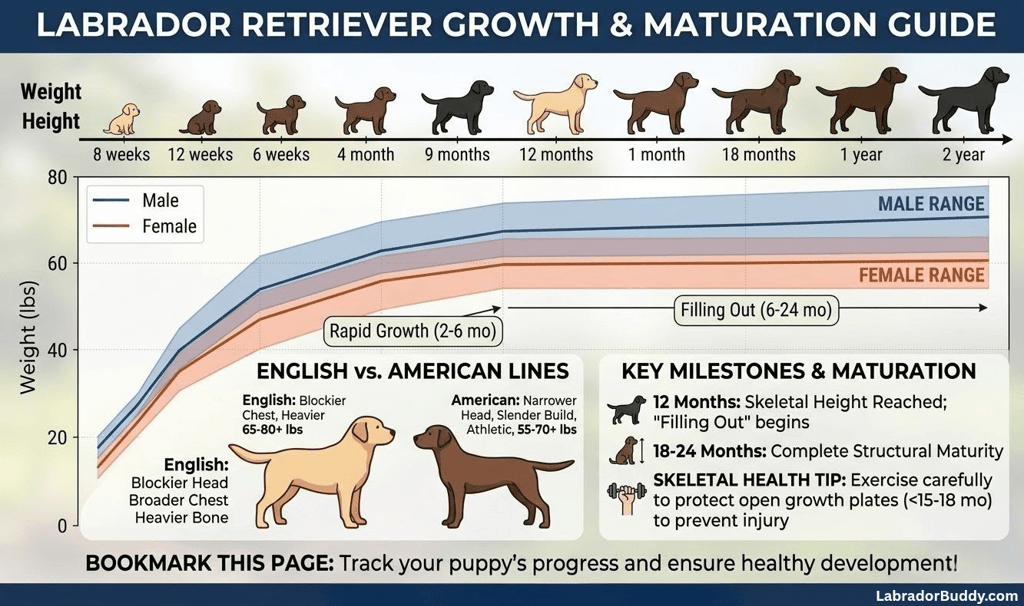
Labrador Retriever Growth Chart
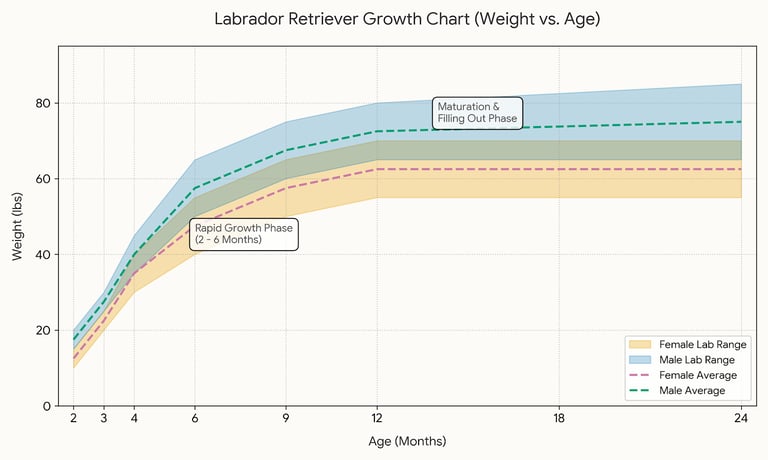
The chart below shows general weight ranges for Labrador Retriever puppies as they grow. These are averages, not strict rules. Some healthy Labs may fall slightly above or below these numbers depending on genetics, diet, activity level, and overall build.
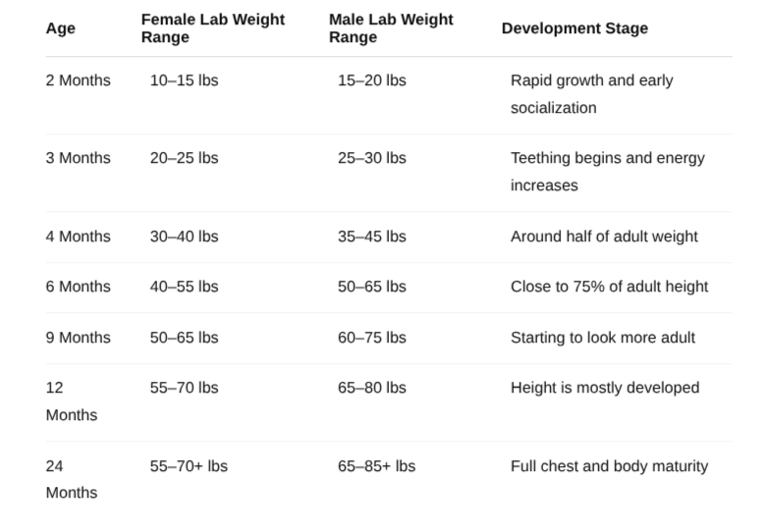
When Do Labradors Stop Growing?
Most Labradors stop growing taller around 12 months of age, but that does not mean they are fully mature. Many Labs continue gaining muscle, broadening through the chest, and developing a more adult body shape until they are 18 to 24 months old.
Female Labradors often mature a little faster than males. A female Lab may look mostly grown by her first birthday, while a larger male may still look lanky or unfinished for several more months.
It is also important to remember that young Labradors are still developing structurally during their first year. Too much high-impact exercise too early can place extra stress on growing bones and joints.
Male vs Female Labrador Size
Male Labradors are generally heavier and broader than females. Most adult males weigh between 65 and 80 pounds, while most females weigh between 55 and 70 pounds.
That said, size can vary. A small male Lab may weigh less than a large female, especially when comparing different bloodlines. Body condition matters more than the number on the scale. A healthy Labrador should have a visible waist when viewed from above, and you should be able to feel the ribs without pressing hard.
English Lab vs American Lab Size
A Labrador’s bloodline can affect how big and bulky they look as adults.
English Labradors, often bred for show lines, usually have a stockier build, wider head, thicker neck, broader chest, and heavier bone structure. They may look shorter and more solid.
American Labradors, often bred for field or hunting lines, are usually leaner, longer-legged, and more athletic. They may weigh less even if they are similar in height.
Both types are Labrador Retrievers, but their body shapes can look noticeably different.
How Fast Do Labrador Puppies Grow?
Labrador puppies usually grow the fastest between 3 and 6 months old. During this stage, it can feel like your puppy is getting bigger every week. Some Labs may gain one to two pounds per week during their fastest growth period.
This is also the stage when feeding habits matter most. Labradors are famously food-motivated, and many will eat far more than they actually need. Fast weight gain may seem impressive, but extra weight can put unnecessary stress on the hips, elbows, knees, and back.
Keeping Your Labrador at a Healthy Weight
A growing Lab should be healthy and well-fed, but not overweight. A fat puppy is not automatically a healthy puppy.
Instead of focusing only on weight charts, pay attention to your Labrador’s body shape. You should be able to:
Feel the ribs without pressing hard
See a waist when looking from above
Notice a slight tuck behind the ribs from the side
Avoid a round, heavy belly after the puppy stage
If your Lab seems too thin, too heavy, or suddenly stops gaining weight, it is best to check with your veterinarian.
My Perspective:
Living with Loni, my yellow Lab, has made me appreciate how important healthy growth really is. Labradors love food, love attention, and are very good at convincing you they need “just one more” treat.
But with Labs, keeping them lean is one of the best things you can do for their long-term health. A young Labrador does not need to be heavy to be healthy. In fact, staying at a proper weight during the first year can help protect their joints as they grow.
For me, the goal is not to raise the biggest Lab possible. The goal is to raise a happy, healthy Labrador who can stay active and comfortable for years.
FAQs About Labrador Growth:
How big does a Labrador get?
Most adult Labradors weigh between 55 and 80 pounds. Females usually fall between 55 and 70 pounds, while males often weigh 65 to 80 pounds. Some Labs may be smaller or larger depending on genetics and body type.
When is a Labrador fully grown?
Most Labs reach their full height by about 12 months old, but many continue filling out until they are 18 to 24 months old.
How can I tell if my Lab puppy will be big?
Large paws, thick legs, and a broad frame can be signs that a Lab puppy may grow into a larger adult. Looking at the puppy’s parents is usually one of the best clues.
What if my Lab is smaller than the growth chart?
A Lab that is slightly below the average weight range is not always a problem, especially if they are active, eating well, and otherwise healthy. Sudden weight loss, poor appetite, or stalled growth should be discussed with your veterinarian.
Is it safe to run with a Labrador puppy?
Structured jogging or running on hard surfaces is not recommended for young Labrador puppies. It is better to wait until they are at least 15 to 18 months old before starting regular running, and even then, build up gradually.
Are English Labs bigger than American Labs?
English Labs often look heavier and stockier, while American Labs are usually leaner and more athletic. English Labs may weigh more because of their broader chest and heavier bone structure.
Final Thoughts:
Labrador Retrievers grow fast, but healthy growth is more important than fast growth. Whether you have a black, chocolate, or yellow Lab, the goal should be steady development, proper nutrition, age-appropriate exercise, and a healthy body condition.
A well-raised Labrador does not need to be oversized or overweight. With the right care, your Lab can grow into a strong, happy, loyal companion for many years to come.
Labrador Buddy
Get tips, advice, and other information on Labradors
Join Labrador Buddy For Updates
© 2026. All rights reserved.