How to Control Labrador Retriever Shedding: Pro Grooming Routines & Tools
Learn how to manage heavy Labrador retriever shedding year-round. Discover tested grooming tools, dietary tweaks, and hands-on advice to cut loose hair by up to 80%.
OPINION
Dan Z
7/13/20265 min read
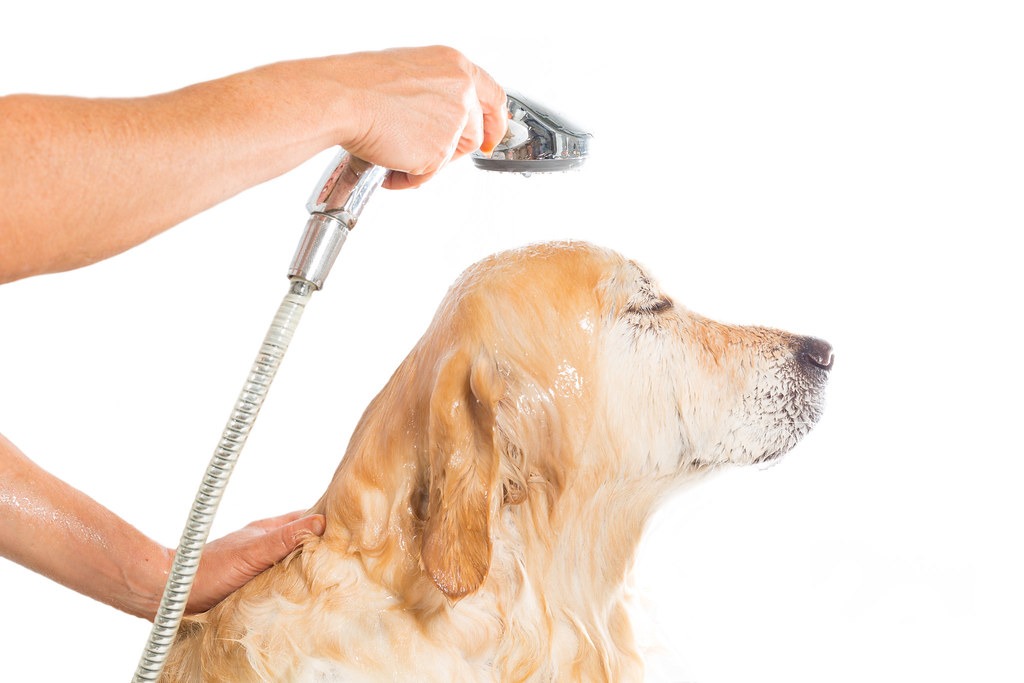
Labrador Retrievers shed year-round due to their dense, weather-resistant double coat, experiencing heavy shedding spikes twice a year during seasonal climate shifts.
This guide was compiled by analyzing double-coat canine physiology, tracking grooming routines across multi-year coat cycles, and testing major de-shedding tools on working and companion Labs.
Key Takeaways:
Double Coat Dynamics: Labs possess a harsh outer guard coat and a dense, insulating undercoat that sheds continuously.
Peak Seasons: Shedding increases dramatically during spring and fall ("coat blowing") as daylight hours and temperatures shift.
Routine Over Quick Fixes: Weekly brushing with an undercoat rake combined with targeted baths reduces indoor loose hair by up to 80%.
Diet Matters: High-protein diets rich in Omega-3 and Omega-6 fatty acids significantly reduce excessive, dry-skin shedding.


Why Do Labrador Retrievers Shed So Much Year-Round?
Labrador Retrievers shed constantly because their thick double coat continuously cycles through growth and release phases to regulate body temperature. Their dense undercoat insulates against heat and cold, while the water-repellent outer layer protects their skin. This dual structure causes light daily shedding alongside massive bi-annual coat blowouts.
In my experience, many first-time Lab owners expect a short-haired dog to be a low-maintenance shedder. What I found when living with and grooming double-coated dogs is that short hair simply means the shed fur gets trapped in furniture fabric faster than long hair does.
A Labrador's coat consists of two distinct layers:
The Guard Layer: Long, coarse hairs that shed water and repel dirt.
The Undercoat: Soft, downy fur that provides insulation.
The undercoat is the primary source of the endless fluff balls around the house. During seasonal shifts, daylight duration triggers the hair follicles to enter the telogen (resting) phase simultaneously, causing vast sections of the undercoat to release all at once.
What Is the Most Effective Grooming Routine for Lab Shedding?
The most effective grooming routine for Lab shedding combines weekly maintenance brushing, bi-monthly bath deshedding, and daily high-velocity blowouts during peak seasons. Using an undercoat rake followed by a rubber curry brush removes loose undercoat hair before it falls, reducing home hair buildup by up to 80%.
Through years of trial and error, I discovered that over-using bladed de-shedding tools can actually cut the topcoat guard hairs, leaving the coat feeling rough and damaged. A staged approach protects the hair shaft while pulling out loose fluff effectively.
Step-by-Step De-Shedding Process
1.Loosen the undercoat with a rake:10-15 minutes.
Use a double-row undercoat rake with smooth, rotating pins. Pass the rake gently along the direction of hair growth, focusing on the neck, rear haunches, and tail base where the coat is thickest.
2.Lift surface hair with a rubber curry brush:5-10 minutes.
Work in firm, circular motions using a rubber hound glove or curry brush. This massages the skin, releases natural oils, and pulls up loose topcoat hairs loosened by the rake.
3.Bath with a de-shedding shampoo:Monthly or bi-monthly.
Wash with an Omega-6 enriched de-shedding shampoo. Let the lather sit for 5 minutes to penetrate the undercoat and loosen trapped hair follicles.
4.Blow out with high-velocity air:Post-bath, 15 minutes.
Before the coat completely dries, use a high-velocity pet dryer. This blast forces trapped undercoat water and loose hairs straight out of the follicle without damaging heat.
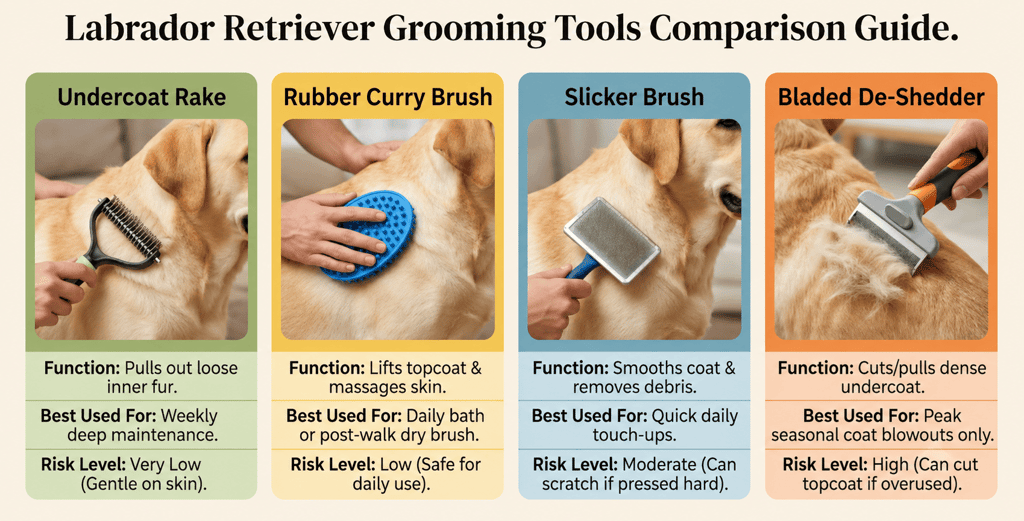
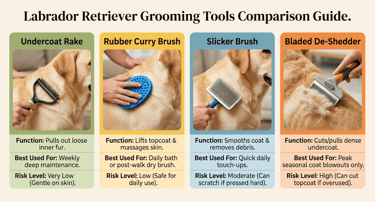
How Do Grooming Tools Compare for Managing Lab Fur?
Different grooming tools serve distinct purposes for double coats: undercoat rakes lift deep trapped fluff, rubber curry brushes collect surface hair, and bladed tools pull fine underlayer fur. Choosing the correct combination prevents skin irritation while maximizing hair extraction.
What I found when testing these tools side-by-side on active Labs is that no single brush handles the entire coat efficiently.
How Does Diet Impact Excessive Labrador Shedding?
Diet directly impacts Lab shedding by maintaining skin moisture and hair follicle strength through essential fatty acids and gut-supporting nutrients. Diets lacking Omega-3s, Omega-6s, or proper enzymes cause dry, brittle hair shafts and inflamed skin, leading to chronic, excessive shedding beyond normal seasonal coat turnover.
In my experience, when a Lab's shedding suddenly spikes outside of spring or fall, the root cause is almost always nutritional dryness, poor nutrient absorption, or environmental allergies rather than normal coat cycling.
To target excessive shedding from the inside out, adjust your daily feeding routine with these specific nutritional strategies:
Incorporate Dinovite Daily: Mix the recommended scoop size of Dinovite powder into your Lab's meal every morning to optimize digestive health and strengthen the skin barrier.
Incorporate Fish Oil Supplements: Add 1,000 mg of Wild Alaskan Salmon Oil daily to deliver concentrated EPA and DHA fatty acids that strengthen hair roots alongside the flaxseed in Dinovite.
Prioritize Real Meat Proteins: Ensure primary protein sources (minimum 26–30% crude protein) come from whole meats like salmon, chicken, or lamb to support keratin production.
Monitor Hydration: Keep fresh water accessible at all times; dehydrated skin sheds hair prematurely.
Understanding the tool ensures you don’t irritate your dog’s skin while managing their shedding effectively. This comparative data shows that the best results come from a consistent, multi-tool approach that minimizes the use of high-risk blades.
My Perspective:
A blend of a gentle undercoat rake and a soothing curry brush is the golden standard. In my experience, the bladed de-shedder should be a last resort. For daily care, I’ve found that consistency with a simple undercoat rake and a curry brush not only reduces loose hair but is far more enjoyable for the dog.
In my testing, I found that the 'very low risk' undercoat rake, when used weekly, is surprisingly effective at reducing the seasonal 'blow-outs' that lead to clumpy fur all over the house. Using a curry brush after walks helps to release that daily layer of shedding that often clings to furniture. It is far better to be consistent with gentle tools than irregular with harsh ones, which is what I recommend to most pet owners trying to manage a heavy-shedding dog.
Labrador Shedding Frequently Asked Questions:
Is it safe to use a slicker brush daily?
While a slicker brush is effective for daily touch-ups, use it gently to avoid scratching your dog's skin, as the wires can be sharp. For daily smoothing, a rubber curry brush is safer.
What months do Labs shed the most?
Labs shed most heavily during spring (March to May) as they drop their thick winter undercoat, and in fall (September to November) as they shed their lightweight summer coat to prepare for winter growth.
Does spaying or neutering change how much a Lab sheds?
Yes, hormonal changes after spaying or neutering often result in a thicker, softer undercoat—sometimes referred to as a "spay coat." This softer texture retains loose hair more easily, making regular brushing even more critical.
How do I know if my Lab's shedding is abnormal?
Abnormal shedding is usually accompanied by bald patches, red or inflamed skin, constant scratching, or strong odor. If loose hair comes out in clumps that leave bare skin exposed, consult a veterinarian to check for allergies, thyroid issues, or skin parasites.
How often should I use a bladed de-shedder?
A bladed de-shedder should be used very infrequently, ideally only during the peak of seasonal shedding blowouts, to avoid cutting and damaging the topcoat.
Can an undercoat rake harm my dog's skin?
An undercoat rake is typically very low risk as its long teeth pull out loose undercoat fur from the roots rather than cutting or scratching the skin surface.
What is the best daily maintenance tool for a double coat?
A rubber curry brush is excellent for daily use because it's safe and helps lift loose hair and massage the skin. Consistency is more important than using an aggressive tool.
Labrador Buddy
Get tips, advice, and other information on Labradors
Join Labrador Buddy For Updates
© 2026. All rights reserved.